Nouvelle école d'architecture dans l'ancienne imprimerie, Siegen, Allemagne

The goal of the energy and climate concept was to develop a robust and sustainable approach to creating an ecologically sound building that provides maximum comfort for its users. Therefore, the concept should minimize negative environmental impacts, reduce energy consumption and carbon emissions during operation, and keep material use to a minimum.
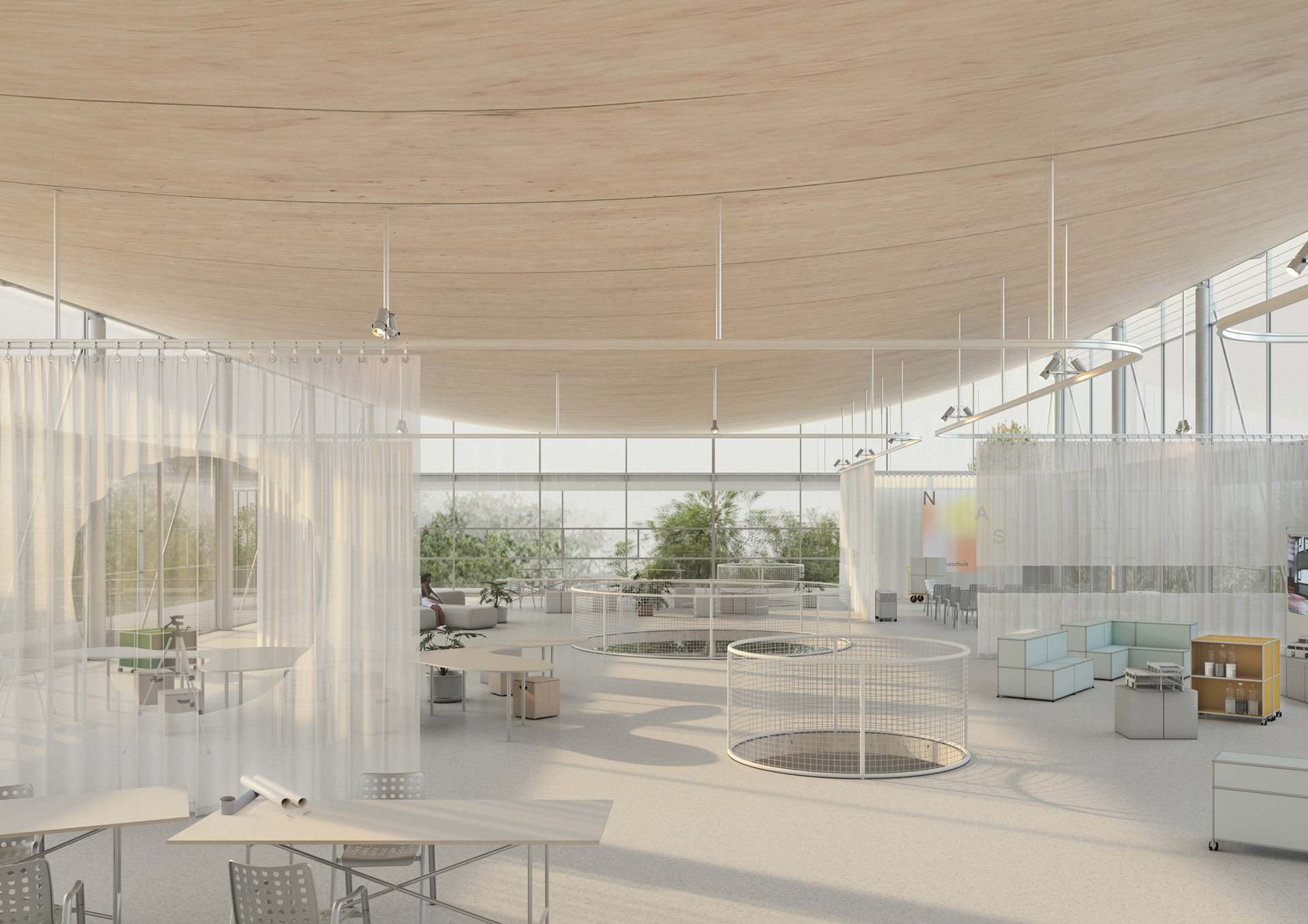
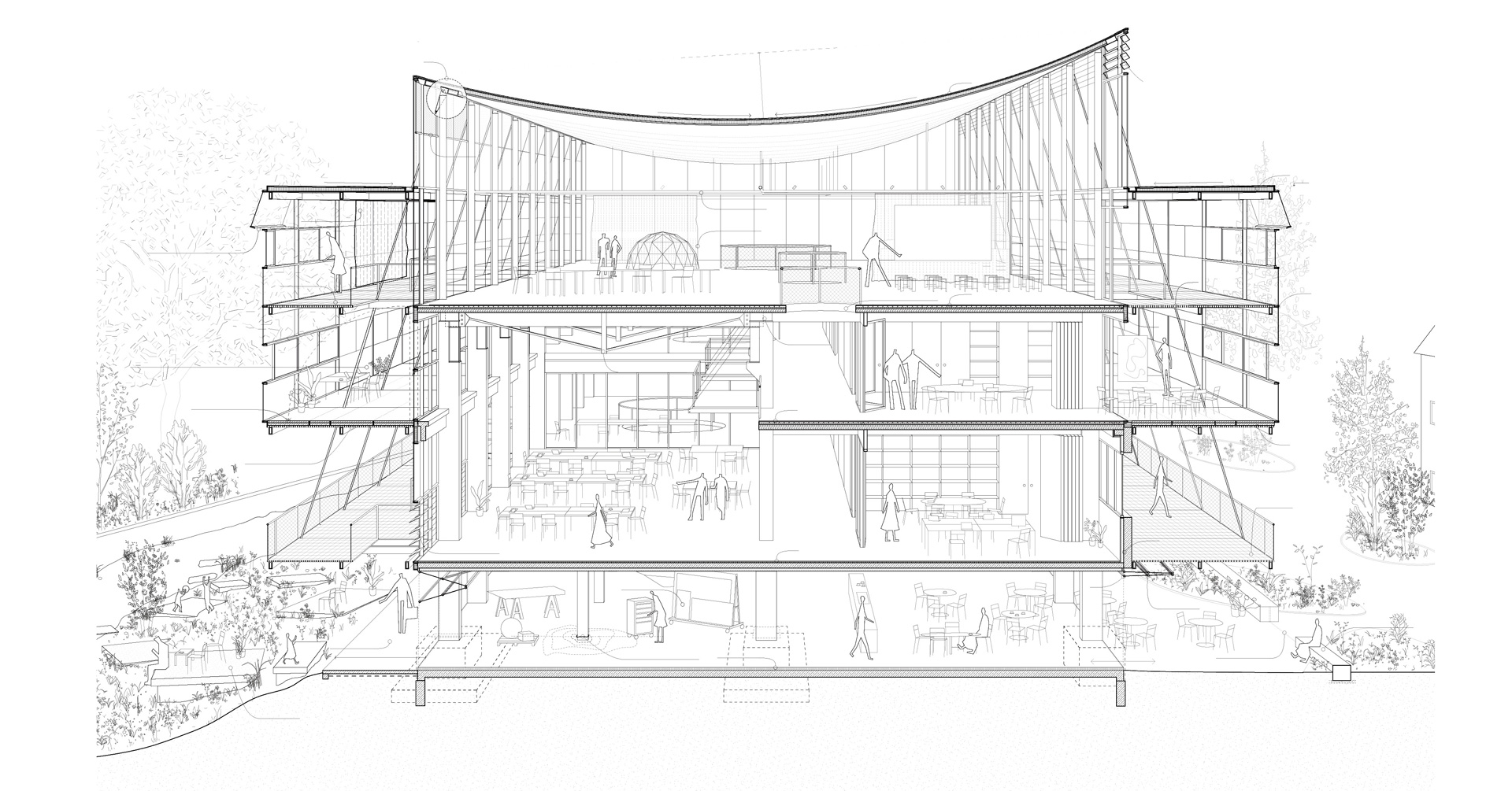
To conserve resources, the existing structure is reused wherever possible and natural materials are used to minimize the embodied energy required for the production and transportation of building materials. Various architectural measures can significantly reduce a building's energy consumption relating to artificial lighting, climate control and heating. KlimaEngineering has influenced the architecture from the very beginning of the design process. In collaboration with the architecture and structural teams, the roof shape was developed to achieve maximum comfort with minimal energy and material input.
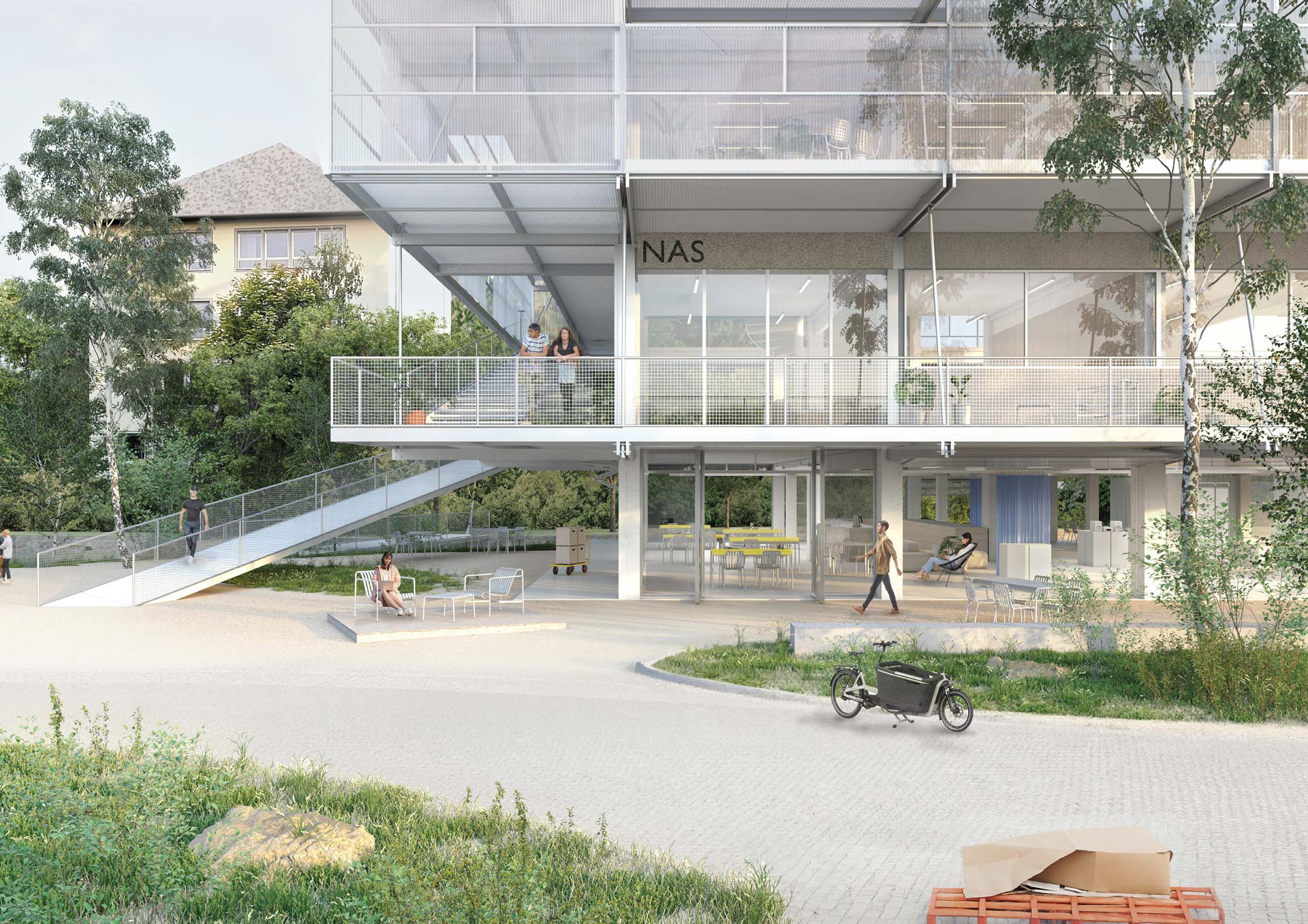
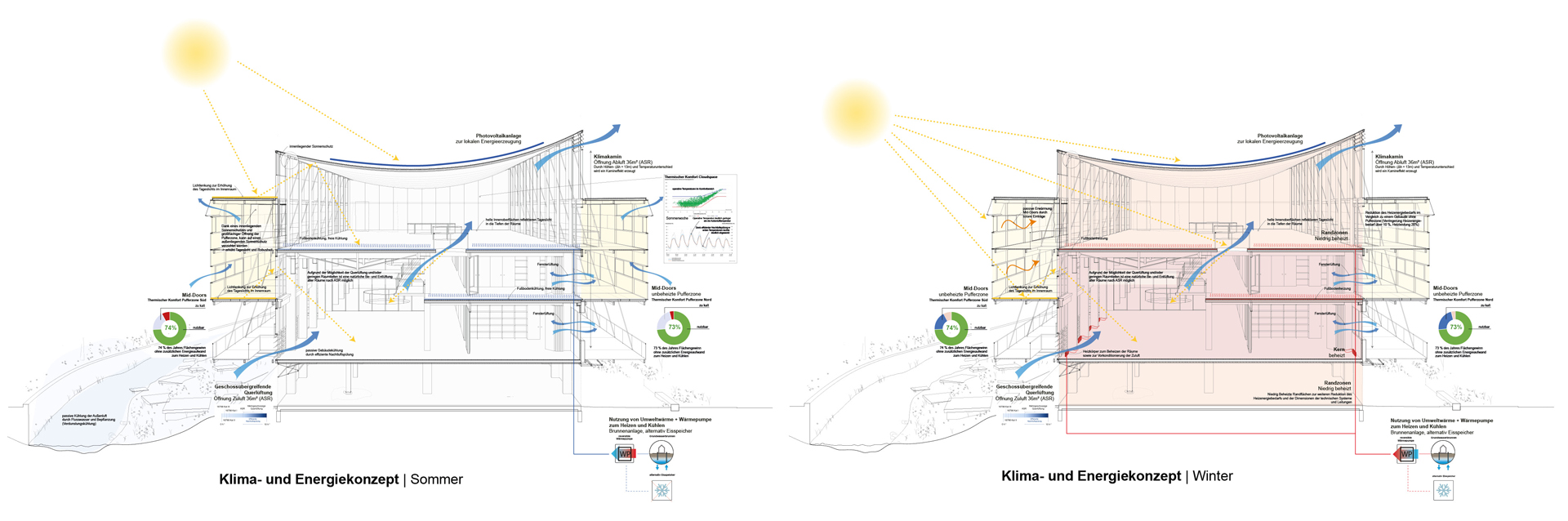
Another key element is the transitional zone between the outdoor and indoor spaces. This zone, known as the Mid-Door Space, features an intermediate climate. This unheated buffer zone reduces heat transmission losses and lowers energy demand by dividing the area into thermally distinct zones: Indoor, Mid-Door and Outdoor. These zones can be utilized depending on the season and personal preference and comfort levels. Glazing and light-transmitting grilles in the Mid-Door Space ensure good access to daylight and passive solar gains. The ground floor is heated with energy efficiency in mind. Heating levels are kept low in rooms that do not require high temperatures in winter, such as the workshop.
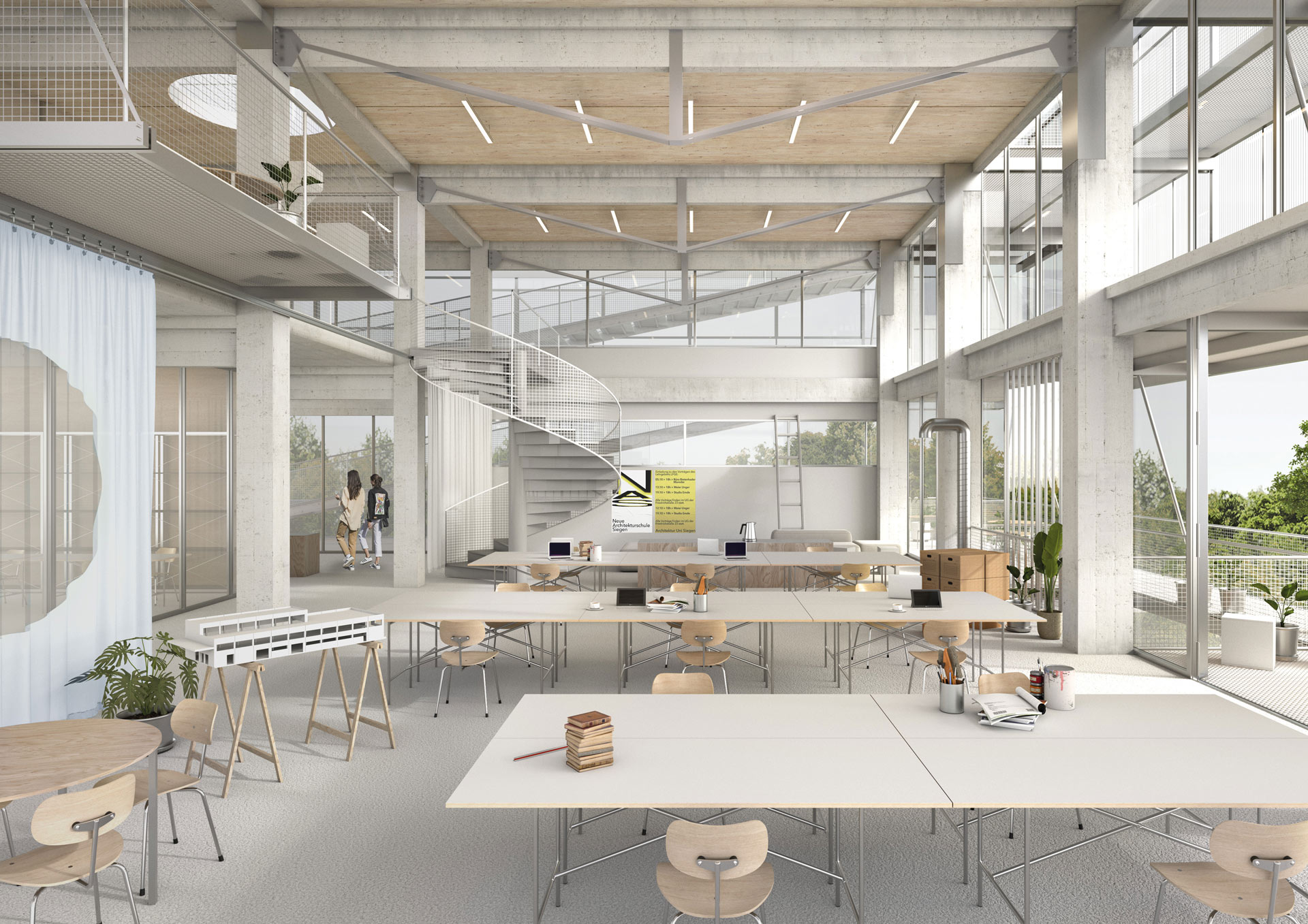
The open floor plan allows for natural ventilation. On the upper floors, the spaces are ventilated via natural cross-ventilation across the entire height of the building. Fresh air enters through openings in the river-facing façade, while radiators mounted on the façade prevent cold draughts from blowing down into the space. Openings at the top, in the so-called 'Cloudspace', facilitate the removal of exhaust air. Thanks to the roof design and height differences, the building can be naturally ventilated. The office space can also be naturally ventilated due to its shallow depth, which allows effective cross-ventilation through operable windows.
A combination of external shading, the building’s thermal mass and night-time ventilation ensures thermal comfort during summer. River water and greenery provide passive cooling through evaporation, which helps to cool the outside air and prevent overheating indoors. During summer, the Cloudspace is additionally cooled via underfloor cooling. The overhanging structure shades the ground floor during periods of high solar radiation, while interior curtains protect against glare.
Rainwater collected from the roof is used to irrigate the plants. A photovoltaic system is planned for the roof to generate solar electricity. An environmental energy system uses groundwater from a well to heat or cool the building as required, and is powered by a reversible heat pump.