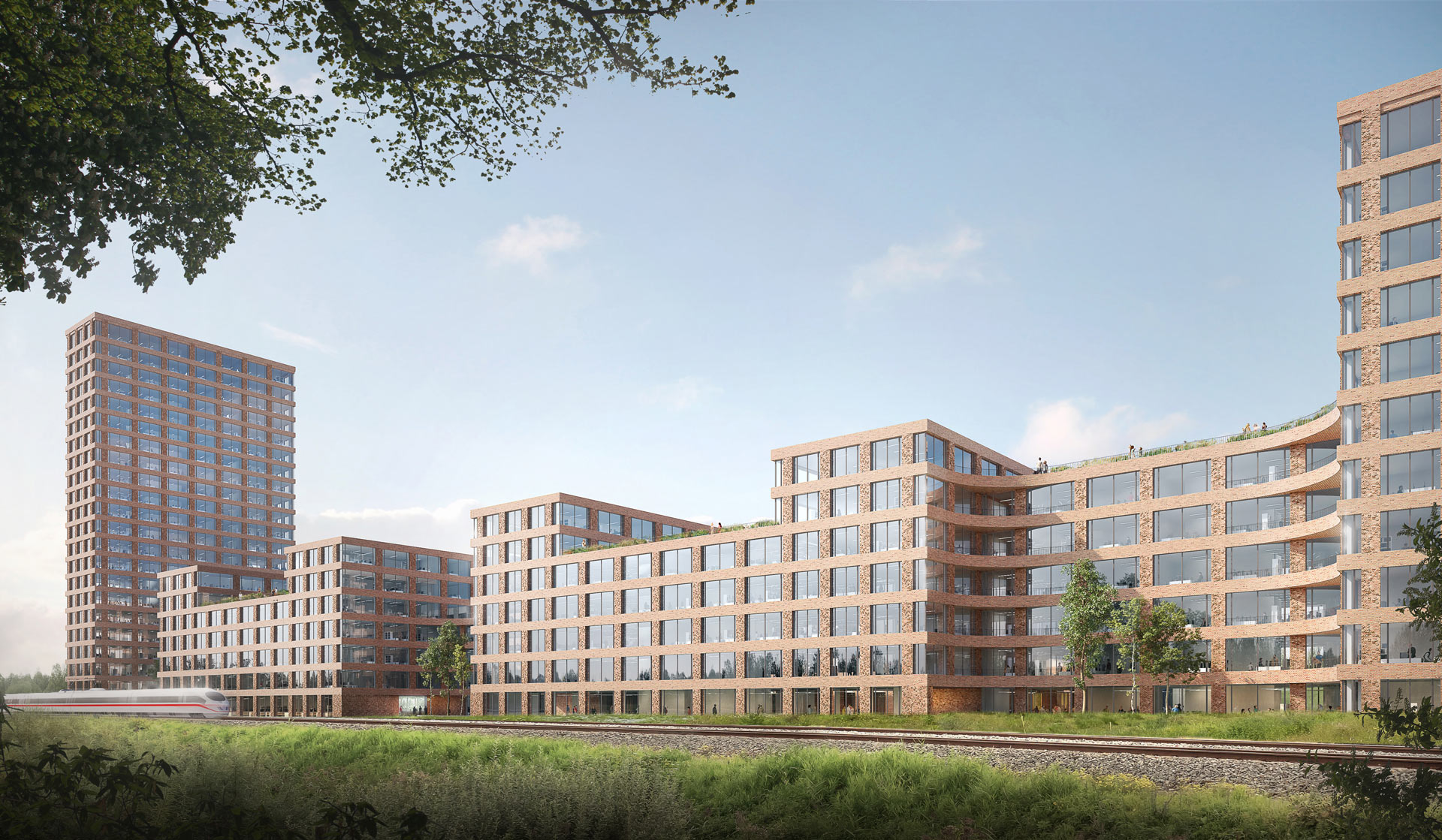
GSG Geneststraße G5 Extension, Berlin, Germany

The commercial housing company GSG is planning to expand its existing office space in Berlin at Südkreuz. The goal is to create a future-proof building with energy efficiency and sustainability. The energy concept developed by the planning team aims to achieve the near-zero energy standard in accordance with EU requirements (EPBD), as well as the EG55 efficiency house standard in accordance with the German Federal Energy Efficient Buildings Act (BEG). In addition, certification of sustainability according to the BREEAM system in the best quality level “Outstanding” and of health and well-being according to WELL is strived for.
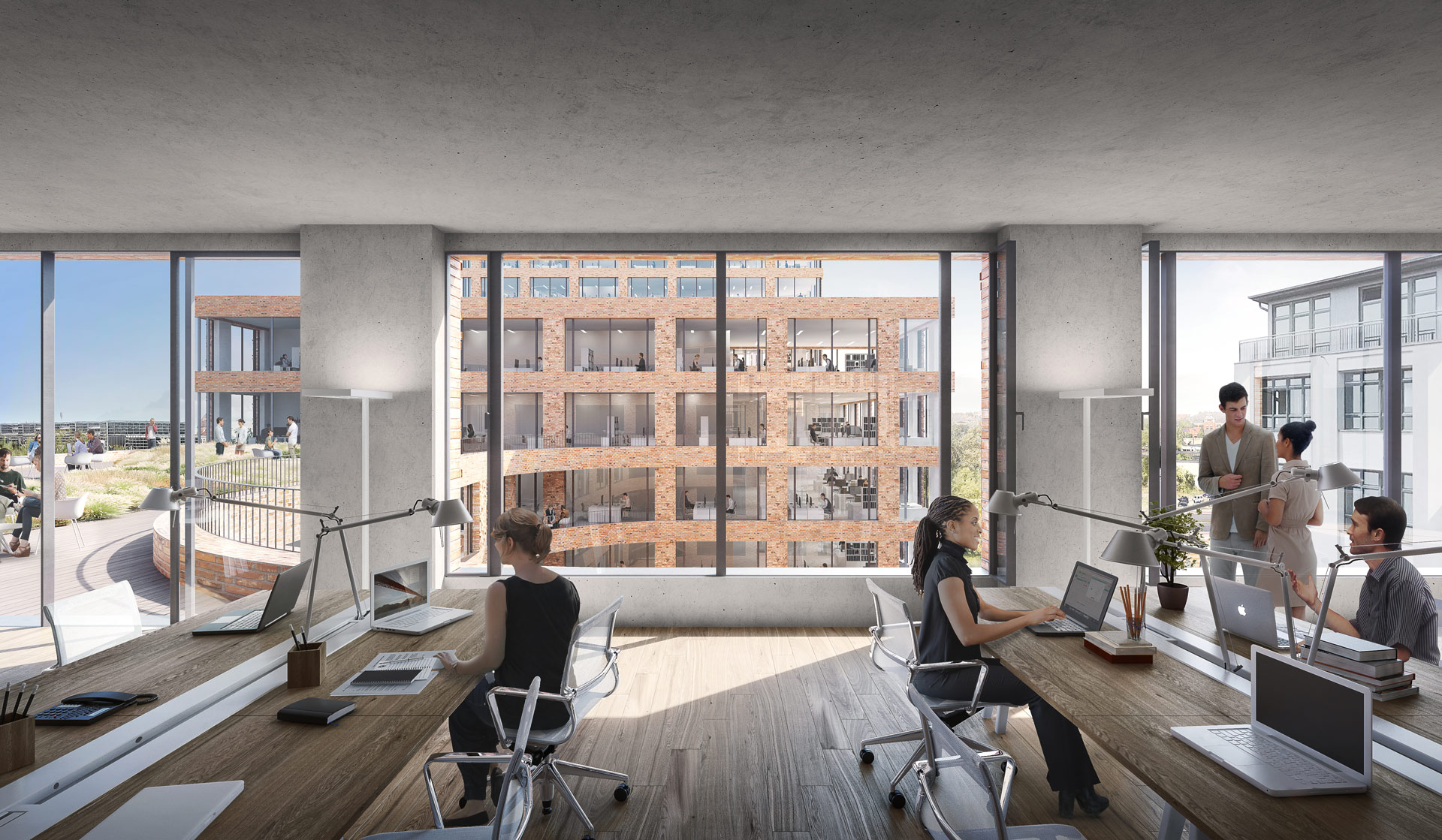
To achieve the energy targets, Transsolar has undertaken simulation-based studies of the planned building. The need for solar shading measures and the solar potential for photovoltaics were calculated with the help of sunlight studies and irradiation calculations. The building's daylight supply was examined and optimized using daylight simulations.
The possibility of natural ventilation was investigated in coordination with the building physics and project planning departments. Due to the high noise pollution at the site, a mechanical basic ventilation system with heat recovery was analyzed for hygienic air exchange.
Thermal simulations were used to evaluate the thermal comfort in various building zones and to forecast the heating and cooling loads of the entire building. The results obtained form the basis for calculating the geothermal potential of the geothermal probe field.
With the help of a life cycle analysis, the ecological footprint of the building construction, building technology and building use was calculated over the entire life cycle and possible optimization potentials were identified.
Air flow simulations were used to analyze the wind flow around the building to evaluate the ventilation, wind comfort in the outdoor area and the potential for energy generation through wind power. For the interior, various ventilation strategies were investigated to achieve the best possible comfort and minimal turbulent mixing (in terms of corona/aerosol pollution).
The proposed elements of the energy concept focus on minimizing CO2 emissions and operating costs. This is achieved by reducing loads through optimization of the building envelope by minimizing heat loss and by passive measures to minimize heating and cooling requirements, such as external solar shading, thermal storage mass and natural ventilation.
For heating and cooling, low-temperature systems ensure low CO2 emissions with radiant heating/cooling instead of air conditioning. Heat recovery ensures efficiency in ventilation.
Photovoltaic collectors on the roof surfaces will generate renewable electrical energy. In terms of sustainability, attention is also paid to minimizing grey energy in building construction and building technology. Healthy building materials, avoidance of pollutants, electromobility / bicycle parking as well as accessibility and the design for a long utilization period also improve the economic efficiency and increase the value of the property.